Vowel-Heavy Words: What Our Dictionary Actually Contains

Which word is more vowel-heavy: eau or ethylenediaminetetraacetate?
The first contains nothing but vowels. The second contains 13 vowel letters, more than any other entry in our dictionary, but also 14 consonants.
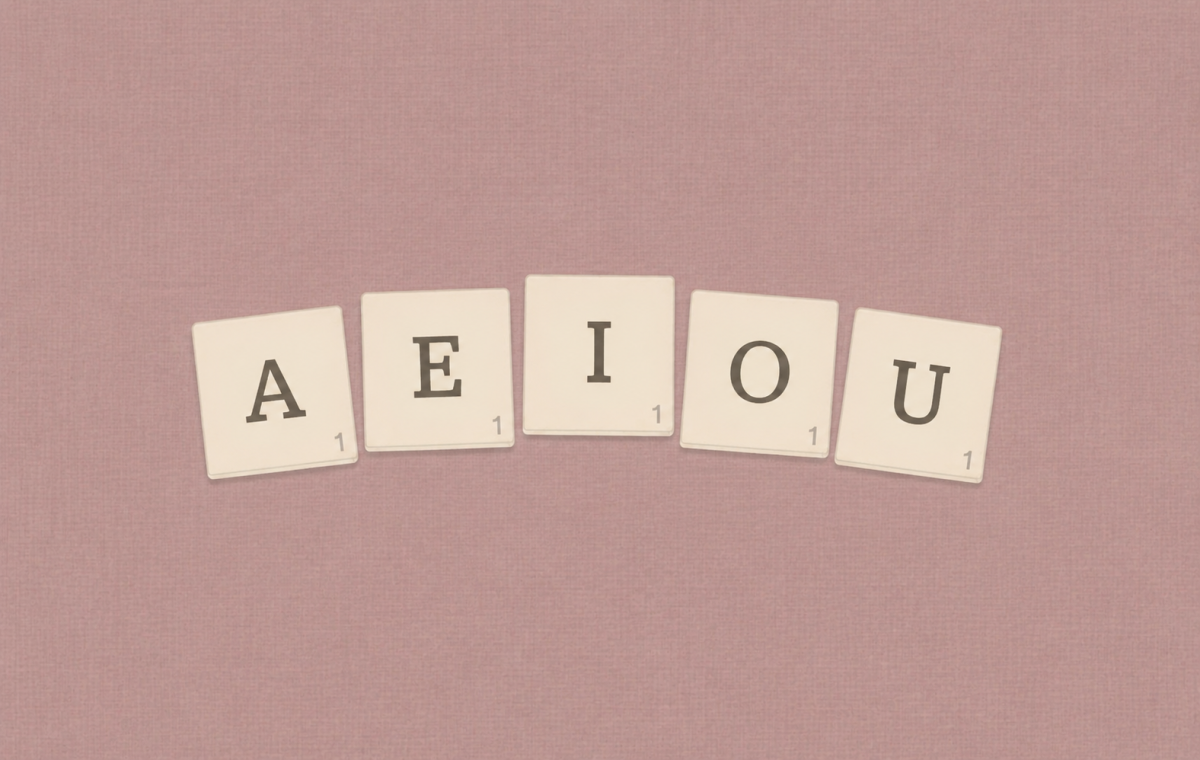
Both answers can be correct because “vowel-heavy” describes two different things:
- the proportion of a word made from vowels;
- or the total number of vowels it contains.
For a timed word game, proportion is usually the more useful measure. Short words such as eau, audio and queue can be entered quickly. A 27-letter chemical term may hold the dictionary record, but it is not a realistic rescue answer with seconds remaining.
One word is made entirely from vowels
I checked every entry in Find the Word English Dictionary v1.0, counting only A, E, I, O and U as vowel letters.
The file contains 172,727 words of at least three letters. Exactly one contains no consonant at all:
eau
No other entry is composed entirely of those five vowel letters.
That finding depends on the dictionary. Other lexicons may contain additional all-vowel forms, and a linguistic analysis might treat Y or W as vowels in particular words. This count uses a fixed spelling rule because the game validates letters, not pronunciation.
The same search found 263 words containing exactly one consonant:
- 180 have three letters;
- 62 have four;
- 21 have five;
- none is longer than five letters.
That final result gives us a useful boundary. Four vowels is not the maximum number found in any word. It is the maximum number found in a word containing only one consonant.
The 21 five-letter words with four vowels
These are the complete five-letter entries containing four A, E, I, O or U letters and one consonant:
aalii, adieu, aecia, aerie, aioli, aquae, areae, audio, aurae, aurei, cooee, eerie, looie, louie, miaou, oidia, oorie, ourie, queue, uraei, zoeae
The list is complete for this dictionary, but the entries are not equally useful.
My first choices would be:
adieu, aerie, aioli, audio, eerie, queue
All six are distinctive enough to remember, and none requires learning a highly specialised plural or technical form before it becomes playable.
Audio is the strongest example in my view. It contains four different vowels, begins with a common round letter and has no spelling uncertainty.
Queue contains four vowel letters as well, but only U and E repeat. Its five-letter spelling also takes longer to type than its pronunciation might suggest.
Entries such as aecia, oidia, uraei and zoeae belong in the verified list. I would not recommend learning them before the familiar six. Dictionary acceptance tells us what can score; it does not tell us what will return reliably under pressure.
The four-letter group is more practical
There are 62 four-letter entries containing three vowels and one consonant.
The most useful are not necessarily the strangest:
aeon, aero, aide, aloe, aqua, area, aria, aura, auto, beau, ciao, ease, eave, euro, idea, iota, lieu, luau, oboe, oleo, olio, ooze, ouzo, quai, urea, uvea
These words cover several starting letters without demanding many keystrokes.
For an A round, I would keep:
aeon, aero, aide, aloe, aqua, area, aria, aura, auto
For E:
ease, eave, euro
For I:
idea, iota
For O:
oboe, oleo, olio, ooze, ouzo
For Q:
quai, queue
For U:
urea, uvea
The Q pair is particularly valuable because the dictionary gives Q only two three-letter answers: qat and qua. Remembering quai and queue adds two familiar-looking routes of different lengths.
Vowel-heavy words are often discussed as tools for clearing a rack full of vowels in tile games. Find the Word has no letter rack. Their value here comes from providing short, memorable answers under a required starting letter.
The words with the most vowels are not the best game words
The dictionary contains many entries with more than four vowels:
- 21,152 contain five;
- 8,933 contain six;
- 3,259 contain seven;
- and 2 contain 13.
The two record holders are:
ethylenediaminetetraacetate
ethylenediaminetetraacetates
They contain 13 A, E, I, O or U letters each.
That result corrects a tempting but false conclusion: the five-letter group does not contain the maximum number of vowels. It contains the maximum vowel proportion available after the all-vowel eau.
The longer chemical entries win by total count only because they contain 27 and 28 letters.
I would not study either for ordinary play. Find the Word gives one unit of progress for every accepted answer, regardless of length. Typing area achieves the same immediate progress as typing ethylenediaminetetraacetate, with 23 fewer keystrokes.
A game that rewards word length could produce a different recommendation. Under equal-per-word scoring, the short answer is usually the better bargain.
What I would learn first
A practical starter set is:
eau, aeon, aide, aloe, aqua, area, aria, audio, eerie, idea, iota, oboe, ooze, quai, queue, urea
Every entry appears in the current dictionary. Each contains at least three vowels, and most are familiar enough that practice can focus on retrieval rather than meaning.
This is not a frequency ranking. The dictionary does not record how often people use the words or how quickly players recall them.
The count also treats only A, E, I, O and U as vowels. Words such as cwm, crwth, rhythm and syzygy require a different discussion because W and Y can perform vowel-like roles without appearing in this five-letter filter.
The full counting rules are available in How We Check Words. The practical test is to open Find the Word and see which of these entries appears without the list in front of you.
The dictionary record belongs to a 27-letter chemical word.
The word I would type first is area.